Last week, in a 24-hour period I learned the following:
🤯 Two competitors in an Ohio fishing tournament were disqualified when they stuffed their catch with lead weights in an attempt to angle a $28,000 first prize.
🤯 The world's top chess player refuses to play against a young upstart who has admitted to cheating in the past, and may have continued to do so using vibrating beads inserted into himself.
🤯 Judges on the international Irish dance circuit have been rigging competitions, in some cases bartering romantic behaviors for high scores for favored dance students.
Has the hustle culture and win at all costs psychology metastasized so much that ne'er do wells will outwardly cheat at leisure sports? Evidently,
yes.
It's kind of disheartening, really.
But, it's also an opportunity. And one you should seize. Because a decline in loyalty has accompanied a rise in mistrust.
In fact, McKinsey says that since the pandemic, 75% of consumers have made purchases from businesses they've never supported before. Customers in every category are willing to shift their spending from business to business, hopping back and
forth like a five year-old child seeking an overdue restroom.
How do you seize a disproportionate share of wallet from consumers who don't
respond to brands (and branding) like they did just a few years ago?
Maybe, by giving them an entirely different brand characteristic to
consider.
Perhaps it's time to lead with honesty, and forthrightness, and accountability using those increasingly rare qualities as a
competitive differentiator?
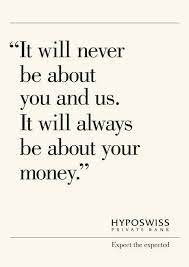
A favorite, modern example of honesty in marketing is the private bank, Hyposwiss, who run a series of
straight-truth print ads that certainly run counter to the typical banking puffery.