The Power of the Human Touch in the Age of Automation
I’ve spent my entire career helping businesses succeed by identifying what everybody else is doing (or likely to do) and teaching them to do something else instead.
It’s like the George Costanza method of competitive differentiation.
It works
best in times when competitors flock to a trend that customers don’t actually care about, or desire. Times of misalignment between company desire and customer desire are massive growth opportunities if you can pursue an opposing strategy.
I believe one of those opportunities is upon us, right now.
There is no question - in my mind - that all companies will embrace AI at some level. The efficiency gains are too profound to ignore AI completely. Embrace of this transformative technology is essentially an existential requirement.
But, what then?
No less a stakeholder
than Microsoft CEO Satya Nadella also believes that it will be difficult to stand out with AI, remarking recently: “As AI gets more efficient and accessible, we will see its use skyrocket, turning it into a commodity.”
This always happens with technology over time.
After all, today it’s rare
to hear: “you should see this amazing website this company has” or “you won’t believe their mobile app!” But in the past, you did hear those utterances. A lot.
So when everybody embraces AI and correspondingly becomes more and more efficient, how do you stand out from the pack?
By keeping it real and keeping it human.
Your “brand” is what people say about you when you’re not
around.
I’ve worked in word of mouth marketing long enough to know that while some companies will create some chatter about AI implementation for a
couple years (heck, I talk about them here and on stage)…medium and long-term, AI use cases will become commoditized and therefore not an engine of conversation.
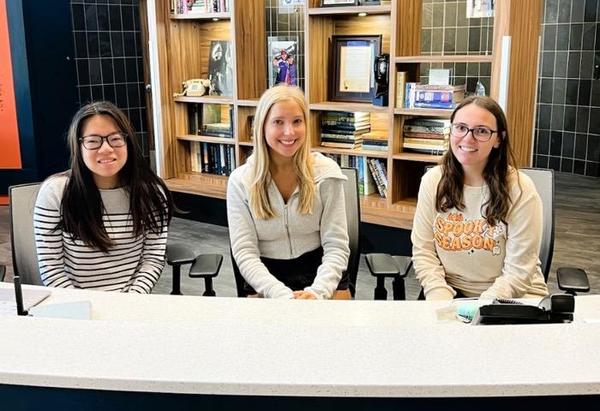
What’s fascinating me right now are scenarios where businesses are embracing manifestly analog, inefficient, human-powered customer interaction. They are zigging while everyone else is AI zagging.
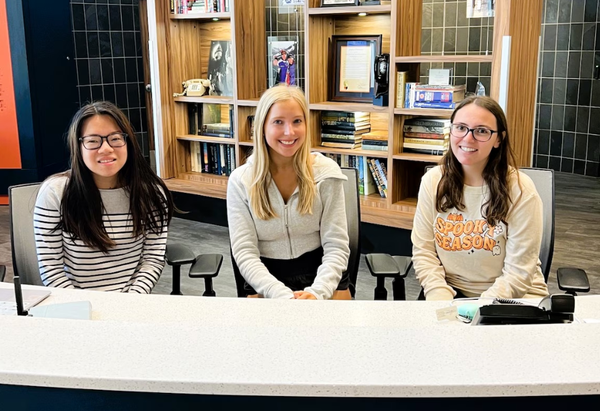
One of my favorite examples is the information desk at Melton Student Center at Auburn University.